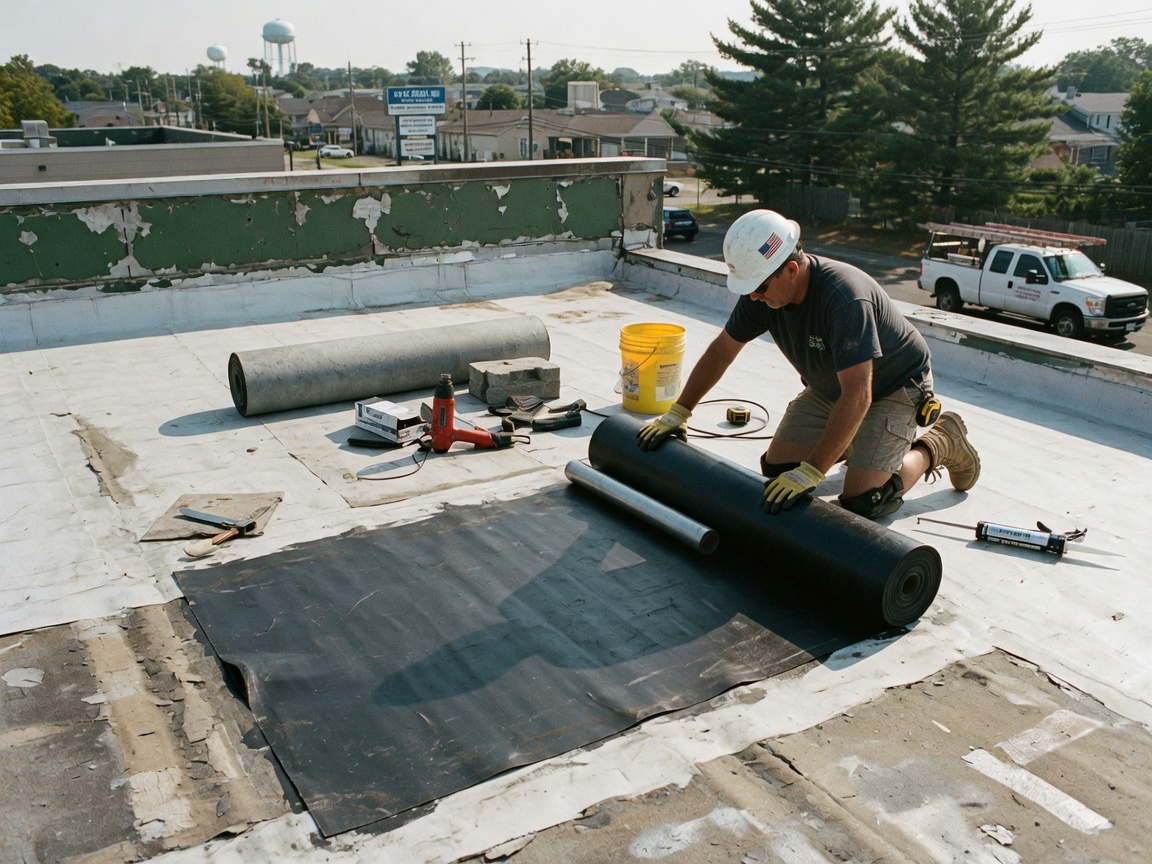
Rubber roofing, typically EPDM membrane, suits the humid subtropical climate in Waterford Works where summer heat expands materials and winter freezes contract them. Camden County homes often feature low-slope roofs on older ranch and split-level stock that collect water during heavy rains. Proper seam sealing and ballast or adhesive attachment prevent leaks that start at flashing points around chimneys common in the area. Edge details must account for wind-driven rain that pushes under loose perimeter edges during coastal storms moving through the Delaware Valley.
Installation begins with deck inspection for rot common in 1970s-1990s homes around Waterford where poor attic ventilation allows moisture buildup. We remove existing gravel or old membrane, then apply new 60-mil EPDM with seam tape rated for temperature cycling between 95-degree summer days and 20-degree winter nights. Tapered insulation boards correct ponding areas that form on flat sections near Maiese Avenue properties. Penetrations for vents and skylights receive pre-molded boots to avoid the cracks that develop when standard caulk fails after repeated freeze-thaw cycles.
Repairs focus on hail damage and seam splits that appear after cold snaps, using matching EPDM patches bonded with compatible adhesive rather than generic sealants. We check for underlying deck issues caused by decades of trapped moisture in Camden County soil humidity. Full replacements include new edge metal and drainage improvements to handle the intense summer downpours that overwhelm older scuppers on Waterford Works roofs.
Technician insight
In Waterford Works the thing that catches most people out with rubber roofing is how quickly seams split after a hard freeze when the original installer used the wrong adhesive for our winter lows. Older ranch homes near 22 Maiese Ave often have hidden deck rot under the membrane because attic vents were never upgraded, and that rot spreads fast once water gets in during a summer thunderstorm.
Winter seam split on Maiese Avenue roof
A homeowner noticed water stains after a January cold snap. We found a failed seam on the low-slope section where the original tape had pulled during contraction. We cut out the damaged area, applied new seam tape rated for freeze-thaw, and added perimeter edge metal to reduce future movement. The roof stayed dry through the next several storms.
Rubber Roofing Services We Offer
✓EPDM Membrane Installation
Full rubber roof replacement using 60-mil EPDM sheets adhered or ballasted for Waterford Works low-slope homes.
✓Rubber Roof Seam Repair
Targeted fixes for failed tape or adhesive seams that leak during winter freeze-thaw cycles in Camden County.
✓Flashing and Edge Detail Work
Replacement of perimeter metal and pipe boots to stop wind-driven rain intrusion common on flat roofs near Waterford.
✓Ponding Water Correction
Tapered insulation and drainage upgrades that eliminate standing water after summer storms in Waterford Works.
✓Emergency Rubber Roof Patch
Same-day temporary and permanent patches for active leaks during heavy Camden County rainfall events.
Rubber Roofing Cost in Waterford Works, NJ
| Service | Typical Range | What Affects It |
|---|---|---|
| Full EPDM replacement | $4.50–$7.50 per sq ft | Includes membrane and basic flashing; deck repairs add cost |
| Seam or patch repair | $250–$650 | Varies by number of locations and access difficulty |
| Flashing replacement | $400–$900 | Perimeter or penetration work on older homes |
| Ponding correction | $800–$2,200 | Tapered insulation and new drains |
Ranges are typical for Waterford Works, NJ and confirmed with an exact written quote before any work starts.
How it works
- 1
Site Assessment
We inspect the existing membrane, deck condition, and drainage on your Waterford Works roof during daylight hours.
- 2
Material Selection
Choose EPDM thickness and attachment method based on slope, wind exposure, and existing insulation in Camden County homes.
- 3
Deck Preparation
Remove old material, repair rotted sheathing, and install tapered boards where ponding occurs.
- 4
Membrane Application
Roll out and adhere or ballast new EPDM, sealing all seams and penetrations with temperature-rated products.
- 5
Final Inspection
Check seams, edges, and drainage before leaving the site, then schedule follow-up after first heavy rain.
Pricing
Costs depend on roof size, slope, and whether insulation or deck repairs are needed.